Lord, Is It Me?

There are moments in ministry that no seminary, no training, and no mentor could ever prepare you for. Moments where your deepest wrestlings are not with the congregation, the budget, or the community—but with yourself.

I’ve been in ministry for 27 years. In that time, I’ve learned how to navigate pain, cast vision, confront broken systems, and love deeply. I’ve stood when I didn’t think I could. I’ve preached when my spirit was empty. I’ve prayed when the words didn’t come easy.

But this season? This one is different.

This one is forcing me to ask a dangerous, sacred question:
“Lord, is it me?”

Not out of guilt.
Not out of failure.
But out of faith.

“But when evening came, he was reclining at the table with the Twelve. And while they were eating, he said, ‘Truly I tell you, one of you will betray me.’ They were very sad and began to say to him one after the other, ‘Surely you don’t mean me, Lord?’”
—Matthew 26:20–22 (NIV)

That moment around the table with Jesus resonates more now than ever. The disciples didn’t posture or pretend. They paused and examined themselves. And I find myself there too. Not because I’m betraying Christ. But because I love Him enough to wonder if, somehow, I’m getting in the way of what He wants to do through me.

I look around and see churches swelling in size, ministries going viral, and platforms growing with every click. But too often, what lies beneath that growth is theology that entertains instead of transforms, that appeases instead of convicts.

And here I am—trying to be faithful.
Preaching what I believe God has assigned to my heart.
Teaching what has been revealed through prayer, study, and sacred discernment.
Serving the community and building the Kingdom the best I know how.

Yet, growth feels slow. Sometimes stagnant.
And in moments of vulnerability, I wonder if the common denominator… is me.

What if I’m the bottleneck?
What if what I’m offering is no longer suited for a traditional church setting?
What if I’ve missed the mark?

And still—deep within—I believe I’m doing what God has called me to do.

But belief doesn’t always silence the burden.
Faith doesn’t always make the fog disappear.

So let me be honest. Let me be human.
I don’t need answers today. But I do need space.
And if you’re reading this—maybe you do too.

If you’ve ever found yourself questioning your impact,
If you’ve ever measured faithfulness by visible fruit and came up short,
If you’ve ever wondered whether your obedience really matters,
Then… come sit with me in this space.

“Let us examine our ways and test them, and let us return to the Lord.”
—Lamentations 3:40

“Search me, O God, and know my heart! Try me and know my thoughts! And see if there be any grievous way in me, and lead me in the way everlasting.”
—Psalm 139:23–24 (ESV)

I don’t want what people call success.
I don’t want vanity metrics.
I don’t want smoke and mirrors.

I just want to be faithful.
To give God my best.
To fulfill the totality of what I was created to do.

And maybe—just maybe—faithfulness means going back to the drawing board.
Not because I’ve failed.
But because I’m still being formed.

There’s no shame in reevaluation.
There’s no guilt in asking hard questions.
There’s only grace—grace to grow, to stretch, to evolve.

I don’t have all the answers.
But I still have the hunger to hear one thing from my Savior:

“Well done, good and faithful servant… Enter into the joy of your Lord.”
—Matthew 25:23 (NKJV)

Until then, I’ll keep showing up—
Searching.
Serving.
And staying close to the One who called me in the first place.


A Prayer for the One Who’s Wrestling

God of the table and the wilderness,
You who called us before we called You—
We are here with questions,
not because we doubt Your power,
but because we desire Your presence in the places we feel most unsure.

If we are the problem, reveal it.
If we are the planting, root us.
If we are the pruning, keep us.
If we are the remnant, strengthen us.

Speak to the quiet parts of our hearts.
Let our mission be Your mission.
And let us be faithful—not to outcomes, but to obedience.

May our “Well done” come not from the crowd,
but from Christ.

Amen.

Bleeding While Leading: The Unspoken Cost of Caring

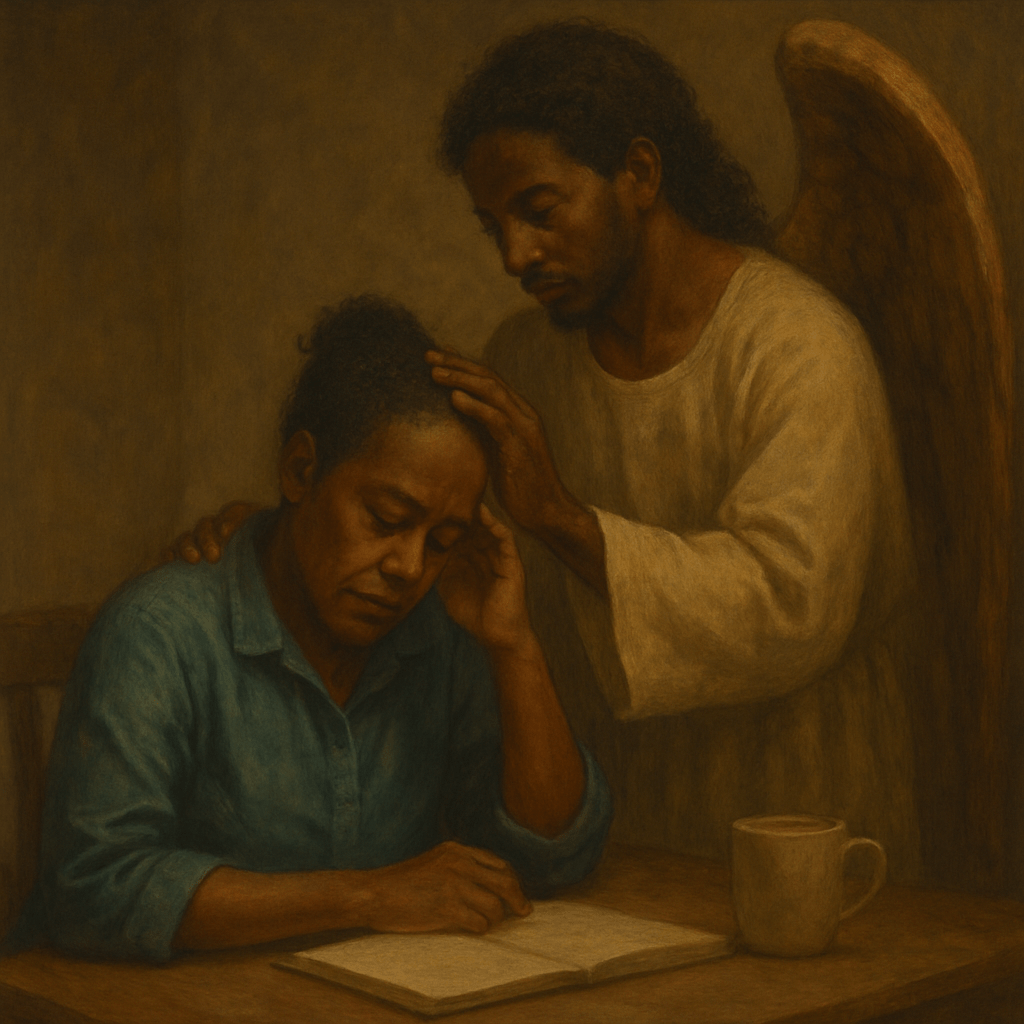
Generated image

I hate what happens when you genuinely care for people.

Because when you care, you give. You pray, labor, sacrifice, and remain present even when your body says rest and your heart says retreat. But when you care, you open yourself to the inevitable: the heartbreak. The disappointment. The silence after the investment. The betrayal after the trust.

And deep down, you know it’s coming. You can sense it before it arrives. You try to brace for it. You even entertain the idea of becoming calloused enough to not feel it so deeply. But no matter how much you prepare, pain still finds its way in. That’s the strange paradox of pastoring: you are asked to be fully present, wholly available, spiritually discerning, and emotionally intelligent—while also guarding your heart from being shattered repeatedly.

I’ve often heard, “Don’t take it personally,” when people walk away from the congregation, speak poorly of a ministry effort, or misrepresent what pastoral leadership really entails. And while the advice is often well-meaning, I struggle with it. Because I am a person. I do take it personally. My humanity is not a separate compartment from my calling—it’s intertwined with it.

Someone once told me, “You’ll have to learn how to lead while bleeding.” I’ve never forgotten those words. But as I’ve grown, I’ve also come to believe this: ministry doesn’t require sepsis to prove your dedication. You don’t have to die inside to stay faithful to your post. You don’t need to sacrifice your wholeness to prove your worth.

Instead, I’ve found something more meaningful: the sacred space of holding humanity and holiness together. The pastoral role is not to bleed out, but to feel deeply without infecting others. I don’t want to become numb. I want to be authentic. And authenticity means admitting: some days, this is hard. Not because I don’t love God. But because I love people—and loving people means risking heartbreak.

Is there an answer to how we navigate the personal from the prophetic? Can a pastor bring their full self—heart, mind, spirit, and scars—into the pulpit and still walk in power?

I believe we can. I believe authenticity is not only possible—it’s necessary.

But we have to take our cues from Jesus. In the Garden of Gethsemane, Jesus was fully divine, but also fully human. He didn’t pretend that the weight of the cross was light. He questioned. He lamented. He asked for another way. And then… He accepted the assignment.

That garden moment gives me permission to be honest with God. To weep. To feel. To ask. To hope. And still to lead.

Maybe we’re all in some kind of garden right now—struggling with obedience and honesty at the same time. Hoping to arrive at peace while still reeling from pain. Maybe that’s what Paul meant when he said strength is made perfect in weakness. Maybe the hard places don’t disqualify us—they disciple us.

I don’t have all the answers. I just know some days, I wish it didn’t hurt so much.

And maybe—just maybe—that’s the step of faith.


Prayer of Reflection:

God of Gethsemane and Calvary,
Teach us to lead with tender strength.
Give us space to feel,
Permission to question,
And courage to continue.

Guard our hearts,
But don’t let them grow cold.
Let our humanity remain a gift,
Not a liability.

And when we’re in our garden moments—
Bleeding, bargaining, or broken—
Remind us:
You were there too.
And You stayed.

Amen.

What to the Oppressed is the Fourth of July?

A Reflection on Frederick Douglass, Washington, and the Unconsidered Christ

On this side of Independence Day, I find myself haunted by the words of Frederick Douglass. In 1852, he stood before a crowd and asked pointedly, “What, to the American slave, is your Fourth of July?” His answer was sharp and unsparing:

“…a day that reveals to him, more than all other days in the year, the gross injustice and cruelty to which he is the constant victim.”

Today, nearly two centuries later, we are still forced to wrestle with the same hypocrisy. Recent events in Washington have laid bare the moral contradictions that Douglass decried. Laws debated and policies passed in grand chambers seem to disregard the very people Christ prioritized — the poor, the foreigner, the outcast, the Black and brown bodies that built this nation with blood and sweat and tears.

Where was Christ in these deliberations? His name was not called. His heart was not sought. His cross was not lifted. Instead, we witnessed once more the American penchant for political theater that secures power but forsakes the least of these.

The poor were rejected.
Budgets were balanced on their backs. Relief delayed, assistance cut, while billionaires celebrated new tax loopholes.

The foreigner was vilified.
Families fleeing violence were met with barbed wire and bureaucratic cruelty.

Black people were told to wait — again.
Wait for justice, wait for dignity, wait for their full humanity to be recognized. As if we have not waited long enough.

And so Douglass’s words echo with fresh relevance, indicting a nation that preaches liberty while practicing exclusion, that celebrates freedom while perpetuating systems that choke the very breath from the oppressed.


The Testimony of Scripture

The Word of God stands in holy opposition to the machinery of colonialism, imperialism, and greed. Consider these words:

“Do not oppress the foreigner; you yourselves know how it feels to be foreigners, because you were foreigners in Egypt.”
(Exodus 23:9)

“Woe to those who make unjust laws, to those who issue oppressive decrees, to deprive the poor of their rights and withhold justice from the oppressed of my people.”
(Isaiah 10:1-2)

“He has filled the hungry with good things, but has sent the rich away empty.”
(Luke 1:53)

These are not passive suggestions — they are divine demands. God’s law was always bent toward protecting the vulnerable, always suspicious of empire. Jesus was born under occupation, executed by an imperial power, and rose to declare a kingdom not of this world.


My Rejection of Colonialism and Imperialism

As a disciple of Jesus Christ, I reject the colonial imagination that built this nation on stolen land and enslaved labor. I reject the imperial impulse that sends drones instead of diplomats, that sees military might as salvation. I reject a Christianity co-opted by nationalism, that wraps the cross in a flag and dares to call it holy.

Instead, I stand with the Christ who flipped tables, who touched lepers, who broke bread with traitors and sinners. I stand with the Christ who said:

“The Spirit of the Lord is upon me, because he has anointed me to proclaim good news to the poor… to set the oppressed free.”
(Luke 4:18)


So What is the Fourth of July to Me?

It is a reminder that the work is unfinished. That fireworks crackle over graves of enslaved ancestors. That freedom is still unequally distributed. That God’s call to “let justice roll on like a river” (Amos 5:24) is still unheeded by many in power.

But it is also a reminder of hope. Because every Douglass rises again in new generations — truth-tellers, justice-seekers, peacemakers who refuse to bow to empire. And the same Spirit that stirred Douglass still moves, unsettling our comfort, compelling us toward a more faithful, more liberating witness.

May we listen. May we rise. May we refuse to celebrate a freedom that is not truly for all. And may we live in such a way that Christ is not merely an afterthought in our politics, but the very cornerstone of our public life.

A Prayer for This Nation and for the Oppressed

Gracious and righteous God,
We come before you heavy with the weight of injustice,
yet hopeful because we know you hear the cries of the oppressed.

You are the God who sees —
who saw Hagar weeping in the wilderness,
who heard the blood of Abel crying from the ground,
who stood with the Hebrew slaves against Pharaoh’s empire.

See us now, O God.
Hear the anguish of the poor, the foreigner, the Black and brown bodies
still bearing the scars of systemic violence.
Break our hearts for what breaks yours.

Forgive us for our complacency,
for the ways we have benefited from systems of power
that crush your children.
Cleanse us from the lies of nationalism that confuse the flag with the cross.

Rise up within us a holy anger against injustice
and a holy love that refuses to let hatred win.
Make us instruments of your peace,
warriors for your justice,
and sowers of your reconciling love.

May your kingdom come —
not as empire, not as colonial conquest,
but as liberating good news to the poor,
sight for the blind, freedom for the captive.

Let justice roll down like waters, O God,
and righteousness like an ever-flowing stream.
And let it begin in us.

In the name of Jesus, who stood with the oppressed
and conquered the powers of this world by love,
we pray. Amen.