Christianity, Empire, and the Loss of Uniqueness

I am concerned. Deeply concerned.

First, I’m watching people buy into the lie that Christianity and empire belong together—that somehow following Jesus is compatible with maintaining the power structures of American society. At the same time, I see people I love and respect losing their capacity to understand why others are outraged by the rhetoric (or silence) shaping this country.

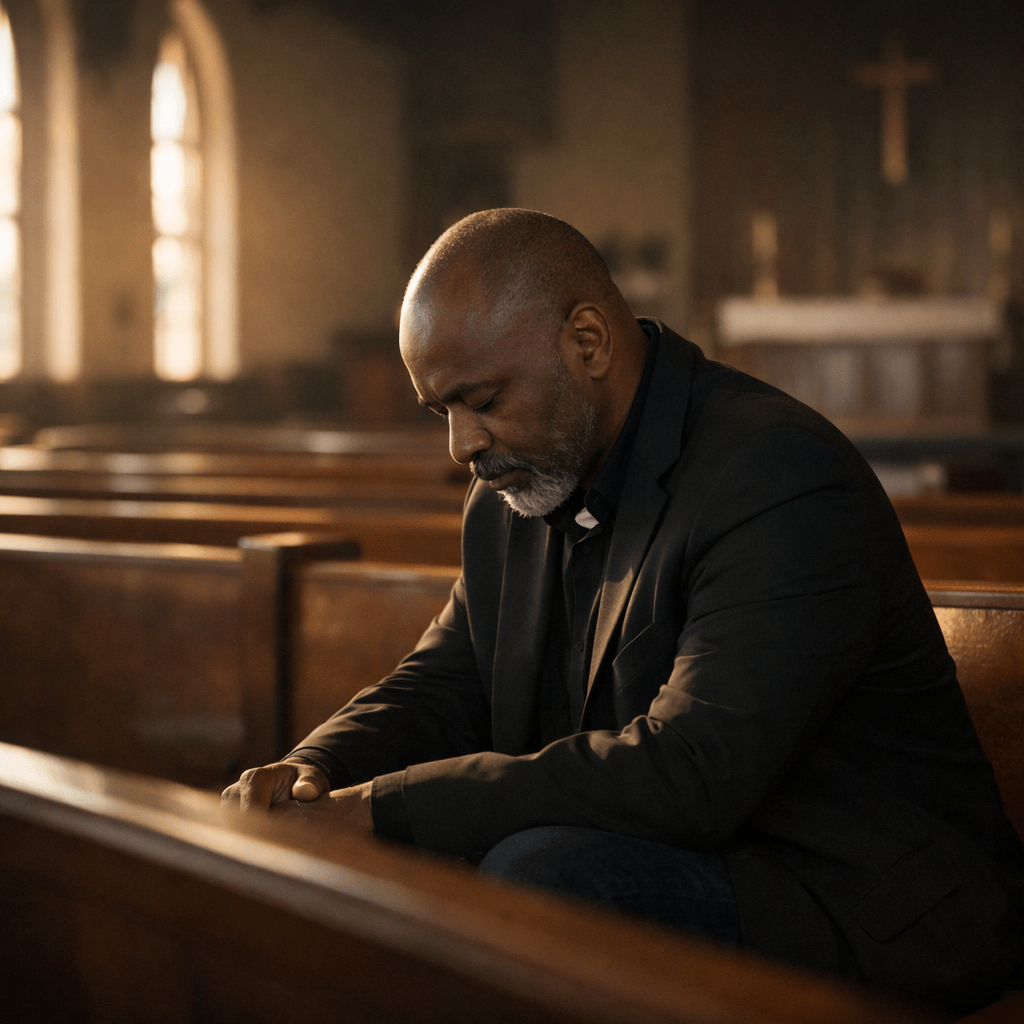
I sit in this world as a Black man who loves God and follows Jesus. I serve as a leader in a predominately white denomination. I rest my hat on the conviction that I am called to ministry. And yet, I remain bewildered by the idea that logic, reason, and decency are often treated as if they must remain separate from authentic faith.

But maybe I should be used to this by now.

From preschool to the 10th grade, I attended private “Christian schools.” The goal was always to set myself up with the best education possible. I excelled academically. I was well-liked. I did my best to get along with everyone—and for the most part, I succeeded. But I knew I would never truly fit the mold those environments expected.

The truth is those institutions offered what they called “Christian education,” but what they taught didn’t fully reflect the principles Christ taught and lived. I was taught history from books written to redirect the truth. I heard narratives that erased my people’s story rather than acknowledge the tragedy of this nation. I wasn’t as vocal then as I am now, but I felt the pressure to mute my true voice, to conform, to blend in.

Leaving those institutions changed everything. At East High School, a public school, I found an incubator for my identity as a preacher, leader, scholar, and man. Ironically, it was there—outside the walls of so-called “Christian education”—that I discovered my uniqueness had a place in the world.

Why? Because I was constantly surrounded by believers who demanded my best, but who also showed grace. They celebrated my uniqueness instead of demeaning it. They encouraged me to live out my convictions, not just pay lip service. They gave me space to be both faithful and authentic without requiring me to erase anyone else’s story in the process.

A public school gave me more grounding in spirituality and faith than a “Christian school” ever did.

That realization stays with me as I watch this society slip back into a season where “faith” is a buzzword rather than a true practice of embracing humanity in all its forms. And it’s not just the church. This nation also treats faith like a slogan, uniqueness like a threat, and justice like a bargaining chip.

Here’s the tension: the Church—the body of Christ—embraces the uniqueness of God’s creation. But the church as an institution struggles to walk out the principles of Christ, too often latching onto political platforms and power structures that couldn’t care less about His kingdom. And likewise, society claims to uphold liberty and equality while writing policies and creating cultures that suppress both.

The Apostle Paul wrote in Romans 12:1–2:

“Therefore, I urge you, brothers and sisters, in view of God’s mercy, to offer your bodies as a living sacrifice, holy and pleasing to God—this is your true and proper worship. Do not conform to the pattern of this world, but be transformed by the renewing of your mind. Then you will be able to test and approve what God’s will is—his good, pleasing and perfect will.”

Authentic faith demands nonconformity. Authentic citizenship demands truth-telling. Both require refusing to be squeezed into the molds of empire, silence, or status quo.

And in that spirit, I hear the words of Robert Jones, Jr.:

“We can disagree and still love each other unless your disagreement is rooted in my oppression and denial of my humanity and right to exist.”

This is where we are. Too often, the institutional church dismisses the uniqueness of God’s creation in the name of keeping peace. Too often, society itself props up empire rather than dismantling it. Both settle for comfort over transformation.

But Jesus never called us to be monolithic believers. And justice never thrives in a monolithic society. Christ lifted up the least, the last, the lost, and the downtrodden. He called people into the fullness of who they were created to be. He pushed people to live authentically, courageously, and faithfully—not to shrink themselves for the sake of the status quo.

I wonder: if we truly paid attention to the teachings of Jesus, would we be in this situation today? If we stopped trying to tell the Teacher that He is wrong, and instead examined what He actually taught, maybe the Church would look different. Maybe society would look different. Maybe we would look different.

Until then, I will continue to believe that authentic faith is not about empire, not about silence, not about conformity. It is about uniqueness. It is about courage. And it is about following Jesus—even when the world tells you to mute your voice.


A Call to Action

  • For the Church: Refuse cheap alliances with platforms that profit from fear, division, or silence. Recover the radical dignity of Christ, who lifted the least and challenged the powerful.
  • For Society: Stop treating liberty and equality as slogans and begin embodying them in policy, education, and everyday interactions. Hold systems accountable when they suppress humanity.
  • For Each of Us: Renew your mind (Romans 12:2). Resist conformity to empire. Speak truth even when it costs. Protect the uniqueness of your neighbor as fiercely as you protect your own.

Because transformation—in both church and society—will only happen when people of courage decide that God’s truth is more important than empire’s comfort.

The Playbook Hasn’t Changed—So Change Your Strategy

Oppressors don’t invent new rules; they recycle the same playbook that brought them to the dance. When I played team sports, every team had the same rulebook—but each team built its own playbook, adjusting the scheme to neutralize an opponent’s strengths. The rules didn’t change; the strategy did.

That’s what we’re facing now. When tragedy strikes, we’re told to be “empathetic” so long as it’s palatable to certain groups. We’re told to pray and send “good vibes” as long as our prayers don’t disturb anyone’s comfort. In this nation, even “human decency” often comes with conditions.

Pastor Kristian A. Smith once said he doesn’t just want Christians to be more biblically literate—he wants us to be better people. That lands hard because so many of us think we already know what Jesus wants from us in the face of the evil we’re witnessing. But if we’re honest, we’ve been off base.

Take Jesus’ teaching: “Do not resist an evildoer, but if anyone strikes you on the right cheek, turn the other also”(Matthew 5:39). We’ve preached passivity from that line, as if surrender somehow convicts the aggressor. Naw, bro—context is everything.

In the world Jesus was addressing, folks touched others with the right hand; the left was reserved for unclean tasks. A strike to the right cheek meant a backhand—a gesture of domination used on someone deemed beneath you. In some legal discussions of that era, a backhanded blow carried a heavier penalty because it was the ultimate public insult to one’s dignity.

Jesus wasn’t telling people to accept humiliation. Turning the left cheek forces a decision: the aggressor must either back down or strike with the open palm—the way you would strike an equal. That move is not cowardice; it’s moral jiu-jitsu. It rejects shame, exposes the hierarchy, and declares, “My honor doesn’t come from you; it comes from God.”

Imagine if we lived like human dignity actually had greater value than optics. Imagine a world where humiliation had a cost. But in the old playbook, domination is the point—silence, submission, and stillness are the goals.

I refuse to be timid in a world that misuses my faith to keep me docile. Christ did not call me to be humiliated in the name of “progress.” The same Jesus who taught cheek-turning as resistance also flipped tables in a rigged economy (Mark 11:15–17; John 2:13–17). That wasn’t a tantrum; it was a targeted act to restore the dignity of those being exploited.

So miss me with cheap grace that baptizes compromise. Don’t just say, “It’s okay, you’ll be better.” Stop it. Don’t only pray about a situation; pray that God makes you an answer to that prayer (James 2:17). God has not called you to passivity. God has called you to move the needleexpose the plan, and adjust your strategy.

The playbook of oppression hasn’t changed:

  • Shame to shrink you.
  • Silence to isolate you.
  • Spiritual gaslighting to domesticate you.

So change your strategy:

  • Name the insult and stand in God-given dignity (Genesis 1:26–27).
  • Refuse the shame and demand equal treatment (Matthew 5:39).
  • Disrupt exploitative tables and rebuild just ones (Mark 11:15–17; Isaiah 58).
  • Pray and act—faith with works (James 2:14–18).
  • Organize courageously in beloved community (Acts 2:42–47; Micah 6:8).

The rulebook of the Kingdom hasn’t shifted. But it does require holy adjustments in a hostile arena. So—change your scheme. Reclaim your dignity. Confront the blow. Overturn the table. Win—with conscience, courage, and community—by any means necessary that honor the God who stamped you with glory.

Scripture to meditate on: Matthew 5:38–42; Micah 6:8; Isaiah 58:6–12; Mark 11:15–17; James 2:14–18.

Reflection prompts:

  1. Where have I confused passivity with Christlikeness?
  2. What “table” in my context needs overturning—and what would rebuilding look like?
  3. How can I become part of the answer I’m praying for this week?

What’s Your Soul’s Exchange Rate?

Scripture: Mark 8:36–37

36 For what does it profit a man to gain the whole world and forfeit his soul? 37 For what can a man give in return for his soul?

I’ve been thinking about the shift happening in our world. We take the simplest things for granted—relationship, human connection, friendship. I remember a time you could linger on a porch, talk across a fence, or enjoy seeing people walk up and down the street with no reason, no agenda—just presence.

Now too many of us are “thuggin’ it out in these social media streets.” The current iteration of social media feels like the final boss Survivor always dreamed up—always on, always testing, always demanding a performance. We’ve confused 24/7 access with the fullness of human life. No wonder people get pick-pocketed by politicians, influencers, and pseudo-intellectuals selling quick takes and counterfeit wisdom. While some are doing their “undergrad” on Facebook, “grad school” on Instagram, and “post-doc” on YouTube or TikTok, the world is starving for the real genius of God’s most intricate creation—humanity.

Yes, I know the irony of saying this while using these tools. I’m not anti-tech; I’m pro-soul. My concern is simple: will we forget how to touch grass? Will we trade embodied life for endless scroll? Our national climate is not a reboot of The Apprentice. Hateful, power-hungry voices are working hard to make this republic an oligarch’s dream and a blue-collar nightmare. The “isms” aren’t imaginary; they’re standing in broad daylight, testing the mettle of our character.

Into this swirl, Scripture asks two linked questions we often split apart: “What does it profit a person to gain the whole world and lose their soul? Or what will a person give in exchange for their soul?” (Mark 8:36–37). Growing up, I mostly heard the first question. The second didn’t register until adulthood. But they rise and fall together: profit and exchange, gain and cost.

Most people live long enough to see the profits of misdeeds run out. When they do, a decision waits at the door: mortgage your possible redemption, or rebuild from square one with God’s backing. That second question—What will you give?—forces an inventory. What have you been trading away to feel like you’re “winning”? Time? Integrity? Neighborliness? The capacity to listen? The courage to tell the truth? The exchange rate is never equal. If your value system is off, the gap becomes a chasm.

So pause and assess your portfolio:

  • Relational capital: When was the last time you lingered—no agenda, just presence—with someone who loves you?
  • Moral capital: Where have you compromised little by little, scroll by scroll, “like” by “like”?
  • Civic capital: Are you showing up where decisions are made—school boards, council meetings, community forums—or only where trends are made?
  • Spiritual capital: How’s your soul—anchored in God or tossed by the algorithm?

This isn’t about guilt; it’s about reallocation. If you discover you’ve been over-leveraged in distraction, divest. If your compassion has gone illiquid, free it up. Move your life back into competent, proven hands. God still funds redemption. Grace still underwrites a fresh start.

Three simple moves this week:

  1. Touch grass on purpose. Take a tech sabbath for a few hours. Walk your block. Say hello.
  2. Phone > post. Call one friend you’ve only been DM’ing. Ask how they really are. Linger.
  3. Show up somewhere that matters. Volunteer, attend a meeting, mentor a student, check on a neighbor. Put your body where your values are.

When the audit comes—and it always does—may we be found rich in what lasts: love, justice, mercy, and a soul at peace. Is this season showing that you’re winning yet? Or is it time to take back your portfolio and place it in the hands that never fail? Think about it.