The Playbook Hasn’t Changed—So Change Your Strategy

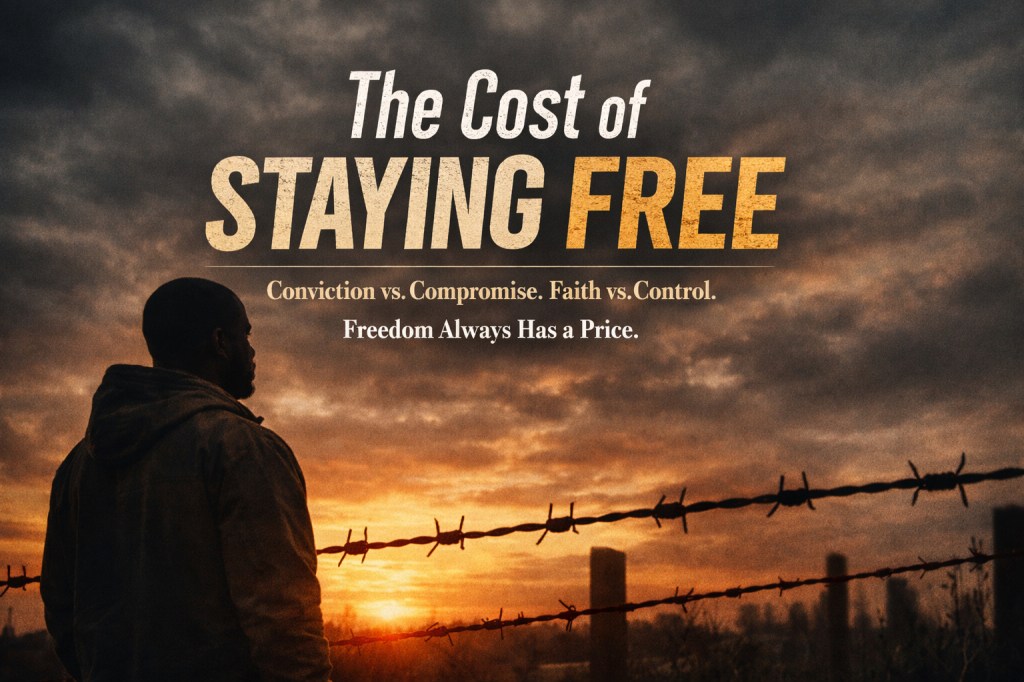
Oppressors don’t invent new rules; they recycle the same playbook that brought them to the dance. When I played team sports, every team had the same rulebook—but each team built its own playbook, adjusting the scheme to neutralize an opponent’s strengths. The rules didn’t change; the strategy did.

That’s what we’re facing now. When tragedy strikes, we’re told to be “empathetic” so long as it’s palatable to certain groups. We’re told to pray and send “good vibes” as long as our prayers don’t disturb anyone’s comfort. In this nation, even “human decency” often comes with conditions.

Pastor Kristian A. Smith once said he doesn’t just want Christians to be more biblically literate—he wants us to be better people. That lands hard because so many of us think we already know what Jesus wants from us in the face of the evil we’re witnessing. But if we’re honest, we’ve been off base.

Take Jesus’ teaching: “Do not resist an evildoer, but if anyone strikes you on the right cheek, turn the other also”(Matthew 5:39). We’ve preached passivity from that line, as if surrender somehow convicts the aggressor. Naw, bro—context is everything.

In the world Jesus was addressing, folks touched others with the right hand; the left was reserved for unclean tasks. A strike to the right cheek meant a backhand—a gesture of domination used on someone deemed beneath you. In some legal discussions of that era, a backhanded blow carried a heavier penalty because it was the ultimate public insult to one’s dignity.

Jesus wasn’t telling people to accept humiliation. Turning the left cheek forces a decision: the aggressor must either back down or strike with the open palm—the way you would strike an equal. That move is not cowardice; it’s moral jiu-jitsu. It rejects shame, exposes the hierarchy, and declares, “My honor doesn’t come from you; it comes from God.”

Imagine if we lived like human dignity actually had greater value than optics. Imagine a world where humiliation had a cost. But in the old playbook, domination is the point—silence, submission, and stillness are the goals.

I refuse to be timid in a world that misuses my faith to keep me docile. Christ did not call me to be humiliated in the name of “progress.” The same Jesus who taught cheek-turning as resistance also flipped tables in a rigged economy (Mark 11:15–17; John 2:13–17). That wasn’t a tantrum; it was a targeted act to restore the dignity of those being exploited.

So miss me with cheap grace that baptizes compromise. Don’t just say, “It’s okay, you’ll be better.” Stop it. Don’t only pray about a situation; pray that God makes you an answer to that prayer (James 2:17). God has not called you to passivity. God has called you to move the needleexpose the plan, and adjust your strategy.

The playbook of oppression hasn’t changed:

  • Shame to shrink you.
  • Silence to isolate you.
  • Spiritual gaslighting to domesticate you.

So change your strategy:

  • Name the insult and stand in God-given dignity (Genesis 1:26–27).
  • Refuse the shame and demand equal treatment (Matthew 5:39).
  • Disrupt exploitative tables and rebuild just ones (Mark 11:15–17; Isaiah 58).
  • Pray and act—faith with works (James 2:14–18).
  • Organize courageously in beloved community (Acts 2:42–47; Micah 6:8).

The rulebook of the Kingdom hasn’t shifted. But it does require holy adjustments in a hostile arena. So—change your scheme. Reclaim your dignity. Confront the blow. Overturn the table. Win—with conscience, courage, and community—by any means necessary that honor the God who stamped you with glory.

Scripture to meditate on: Matthew 5:38–42; Micah 6:8; Isaiah 58:6–12; Mark 11:15–17; James 2:14–18.

Reflection prompts:

  1. Where have I confused passivity with Christlikeness?
  2. What “table” in my context needs overturning—and what would rebuilding look like?
  3. How can I become part of the answer I’m praying for this week?

44: Grace in the In-Between

Today I turn 44. Birthdays mark more than candles on a cake — they invite us to pause, to breathe, and to take inventory of both the goodness of God and the weight of life. For me, this birthday feels like standing in the in-between: caught between deep gratitude and very real difficulty.

I am grateful. Grateful that God has sustained me through every season, even the ones I thought might break me. Grateful for family, ministry, and the countless ways love has shown up. Grateful because the testimony of my life is that God has been faithful, even when I have been weary.

But I must also be honest: this year has not been without difficulty. The responsibilities of leadership, the trials that come with caring for others while managing my own humanity, and the silent battles of the heart are all present. To turn 44 is to stand at a crossroads where blessing and burden hold hands.

And yet, maybe this is where true faith is lived out — in the tension. The Apostle Paul once wrote, “We are hard pressed on every side, but not crushed; perplexed, but not in despair… struck down, but not destroyed” (2 Corinthians 4:8-9). Those words ring deeply for me today. They remind me that difficulty does not cancel gratitude, and gratitude does not erase difficulty. Both can coexist, and both can shape me into who God is calling me to be.

So as I mark this birthday, I choose to see it as a sacred pause — a moment to honor both the goodness and the struggle. Gratitude tells me God is still writing my story. Difficulty reminds me that I cannot write it alone. Together, they push me closer to the One who knows the plans He has for me (Jeremiah 29:11).

Here’s to 44 — a year of walking honestly in the tension, trusting that even here, in the in-between, God’s grace is sufficient.

A Blessing for Year 44

May the God who has carried you thus far carry you still.

May the weight of difficulty never silence the song of gratitude.

May your steps be ordered, your heart be strengthened,

and your spirit find joy in both the sunshine and the shadows.

And may this year be marked by grace upon grace,

until your testimony shines brighter than your trials.

Amen.

Lord, Is It Me?

There are moments in ministry that no seminary, no training, and no mentor could ever prepare you for. Moments where your deepest wrestlings are not with the congregation, the budget, or the community—but with yourself.

I’ve been in ministry for 27 years. In that time, I’ve learned how to navigate pain, cast vision, confront broken systems, and love deeply. I’ve stood when I didn’t think I could. I’ve preached when my spirit was empty. I’ve prayed when the words didn’t come easy.

But this season? This one is different.

This one is forcing me to ask a dangerous, sacred question:
“Lord, is it me?”

Not out of guilt.
Not out of failure.
But out of faith.

“But when evening came, he was reclining at the table with the Twelve. And while they were eating, he said, ‘Truly I tell you, one of you will betray me.’ They were very sad and began to say to him one after the other, ‘Surely you don’t mean me, Lord?’”
—Matthew 26:20–22 (NIV)

That moment around the table with Jesus resonates more now than ever. The disciples didn’t posture or pretend. They paused and examined themselves. And I find myself there too. Not because I’m betraying Christ. But because I love Him enough to wonder if, somehow, I’m getting in the way of what He wants to do through me.

I look around and see churches swelling in size, ministries going viral, and platforms growing with every click. But too often, what lies beneath that growth is theology that entertains instead of transforms, that appeases instead of convicts.

And here I am—trying to be faithful.
Preaching what I believe God has assigned to my heart.
Teaching what has been revealed through prayer, study, and sacred discernment.
Serving the community and building the Kingdom the best I know how.

Yet, growth feels slow. Sometimes stagnant.
And in moments of vulnerability, I wonder if the common denominator… is me.

What if I’m the bottleneck?
What if what I’m offering is no longer suited for a traditional church setting?
What if I’ve missed the mark?

And still—deep within—I believe I’m doing what God has called me to do.

But belief doesn’t always silence the burden.
Faith doesn’t always make the fog disappear.

So let me be honest. Let me be human.
I don’t need answers today. But I do need space.
And if you’re reading this—maybe you do too.

If you’ve ever found yourself questioning your impact,
If you’ve ever measured faithfulness by visible fruit and came up short,
If you’ve ever wondered whether your obedience really matters,
Then… come sit with me in this space.

“Let us examine our ways and test them, and let us return to the Lord.”
—Lamentations 3:40

“Search me, O God, and know my heart! Try me and know my thoughts! And see if there be any grievous way in me, and lead me in the way everlasting.”
—Psalm 139:23–24 (ESV)

I don’t want what people call success.
I don’t want vanity metrics.
I don’t want smoke and mirrors.

I just want to be faithful.
To give God my best.
To fulfill the totality of what I was created to do.

And maybe—just maybe—faithfulness means going back to the drawing board.
Not because I’ve failed.
But because I’m still being formed.

There’s no shame in reevaluation.
There’s no guilt in asking hard questions.
There’s only grace—grace to grow, to stretch, to evolve.

I don’t have all the answers.
But I still have the hunger to hear one thing from my Savior:

“Well done, good and faithful servant… Enter into the joy of your Lord.”
—Matthew 25:23 (NKJV)

Until then, I’ll keep showing up—
Searching.
Serving.
And staying close to the One who called me in the first place.


A Prayer for the One Who’s Wrestling

God of the table and the wilderness,
You who called us before we called You—
We are here with questions,
not because we doubt Your power,
but because we desire Your presence in the places we feel most unsure.

If we are the problem, reveal it.
If we are the planting, root us.
If we are the pruning, keep us.
If we are the remnant, strengthen us.

Speak to the quiet parts of our hearts.
Let our mission be Your mission.
And let us be faithful—not to outcomes, but to obedience.

May our “Well done” come not from the crowd,
but from Christ.

Amen.