Where the Strong Finally Rest

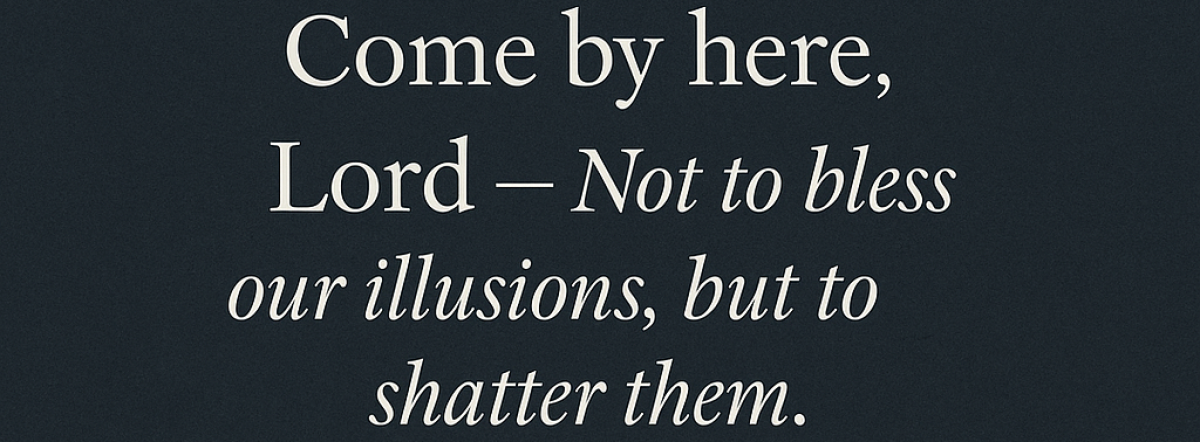
“I can no longer be the strong one in rooms where others refuse to use their own power.
This isn’t reinvention. It’s clarity.”


“I can no longer be the strong one in rooms where others refuse to use their own power.
This isn’t reinvention. It’s clarity.”

For the first time in my life, I find myself with all of my emotional wounds wide open.

For forty-four years, I have tried to understand why my introverted self still needed the charge of community. At times, I believed that longing came from a lack of acceptance. At other moments, I buried myself in productivity—believing usefulness might substitute for belonging.

Now I know better.

The deepest need I have carried is not recognition, affirmation, or achievement. It is community.

Achievement feels good. Being seen for giftedness is affirming. But what happens when you don’t have your tribe? What happens when the community that once anchored you begins to disappear?

Over the last seven years, one by one, the bedrocks of my development have faded—for many reasons. Each loss required just enough grieving to remain functional. I could not afford to mourn too long. Responsibility demanded movement. Ministry required output. People needed strength.

For a long time, I was better at being a machine than being human.

I did not know how to lean into my humanity.

After three long weeks marked by emergency room visits, relentless physical pain, internal turmoil, misplaced blame, and a fatigue unfamiliar to my spirit, I now understand something I can no longer ignore: community is not optional. It is necessary. And it is not accidental. It is intentional.

This coming year requires a reassessment of our circles.

I can no longer accept being the “strong one” in rooms where others defer rather than step into their own power. My capacity for friendship, kinship, and even surface connection can no longer sustain relationships unwilling to reciprocate the act of pouring.

This is not a “new year, new me” statement.

It is clarity.

It is the recognition that my life has requirements if it is to continue with integrity. I must reinvest in what actually matters. I cannot afford to run out of gas anymore. I have a purpose and a charge to keep.

This is the stop where stowaways must get off the train.

The journey ahead requires willing participants—people who see the God-sized picture over my life and who are brave enough to acknowledge the God-sized calling over their own.

If you find yourself in the same place, perhaps this is the moment to pause—not to abandon the journey, but to assess it. Are we carrying unnecessary weight, or are we finally prepared to go further?

This is where the strong finally rest—not because the work is finished, but because strength was never meant to be carried alone.


What’s Your Soul’s Exchange Rate?

Scripture: Mark 8:36–37

36 For what does it profit a man to gain the whole world and forfeit his soul? 37 For what can a man give in return for his soul?

I’ve been thinking about the shift happening in our world. We take the simplest things for granted—relationship, human connection, friendship. I remember a time you could linger on a porch, talk across a fence, or enjoy seeing people walk up and down the street with no reason, no agenda—just presence.

Now too many of us are “thuggin’ it out in these social media streets.” The current iteration of social media feels like the final boss Survivor always dreamed up—always on, always testing, always demanding a performance. We’ve confused 24/7 access with the fullness of human life. No wonder people get pick-pocketed by politicians, influencers, and pseudo-intellectuals selling quick takes and counterfeit wisdom. While some are doing their “undergrad” on Facebook, “grad school” on Instagram, and “post-doc” on YouTube or TikTok, the world is starving for the real genius of God’s most intricate creation—humanity.

Yes, I know the irony of saying this while using these tools. I’m not anti-tech; I’m pro-soul. My concern is simple: will we forget how to touch grass? Will we trade embodied life for endless scroll? Our national climate is not a reboot of The Apprentice. Hateful, power-hungry voices are working hard to make this republic an oligarch’s dream and a blue-collar nightmare. The “isms” aren’t imaginary; they’re standing in broad daylight, testing the mettle of our character.

Into this swirl, Scripture asks two linked questions we often split apart: “What does it profit a person to gain the whole world and lose their soul? Or what will a person give in exchange for their soul?” (Mark 8:36–37). Growing up, I mostly heard the first question. The second didn’t register until adulthood. But they rise and fall together: profit and exchange, gain and cost.

Most people live long enough to see the profits of misdeeds run out. When they do, a decision waits at the door: mortgage your possible redemption, or rebuild from square one with God’s backing. That second question—What will you give?—forces an inventory. What have you been trading away to feel like you’re “winning”? Time? Integrity? Neighborliness? The capacity to listen? The courage to tell the truth? The exchange rate is never equal. If your value system is off, the gap becomes a chasm.

So pause and assess your portfolio:

  • Relational capital: When was the last time you lingered—no agenda, just presence—with someone who loves you?
  • Moral capital: Where have you compromised little by little, scroll by scroll, “like” by “like”?
  • Civic capital: Are you showing up where decisions are made—school boards, council meetings, community forums—or only where trends are made?
  • Spiritual capital: How’s your soul—anchored in God or tossed by the algorithm?

This isn’t about guilt; it’s about reallocation. If you discover you’ve been over-leveraged in distraction, divest. If your compassion has gone illiquid, free it up. Move your life back into competent, proven hands. God still funds redemption. Grace still underwrites a fresh start.

Three simple moves this week:

  1. Touch grass on purpose. Take a tech sabbath for a few hours. Walk your block. Say hello.
  2. Phone > post. Call one friend you’ve only been DM’ing. Ask how they really are. Linger.
  3. Show up somewhere that matters. Volunteer, attend a meeting, mentor a student, check on a neighbor. Put your body where your values are.

When the audit comes—and it always does—may we be found rich in what lasts: love, justice, mercy, and a soul at peace. Is this season showing that you’re winning yet? Or is it time to take back your portfolio and place it in the hands that never fail? Think about it.

Reclaiming Our Love: A Call to Self-Respect and Holy Resistance

I have grown weary of many things. Weariness has become a constant companion, not from the weight of my own burdens, but from the heaviness of living in a world where too many take life for granted.

The alteration of 19 lives—16 children and 3 adults—should shake us to our core. Their names, faces, and dreams cut short should have been enough to bring the world to its knees in repentance and resolve. Yet here we are again—mourning, lamenting, shaking our heads, while the drumbeat of indifference plays on. It is evidence that many people do not truly care about God’s creation. “For you created my inmost being; you knit me together in my mother’s womb”(Psalm 139:13). If God took such care in creation, how dare we treat life as disposable?

The Premise Within the Premise

I have said many times that the “golden rule” has a premise within a premise. Do unto others as you would have them do unto you (Matthew 7:12). But let’s be honest—the deeper truth often goes unexamined. When you practice an action toward someone else, you are not only expressing your heart—you are granting permission for the recipient to respond in kind.

If I act in love, I am giving space for love to flourish. If I act in hate, I create the cycle where hate multiplies. More than that, it reveals what I truly believe about myself. “For the mouth speaks what the heart is full of” (Luke 6:45). If I live from a place of bitterness, anger, and hatred, then those toxic forces govern my entire worldview.

But here’s the deeper truth: my refusal to respond in kind reveals what I believe about myself. My unwillingness to lash out in vengeance is not weakness—it is the fruit of self-love. I am not absolving the harm done. I am not practicing “cheap grace” that excuses wickedness. My love for myself will not allow me to descend into the pit of destruction.

Love as a Form of Resistance

When I think about the murder of children during morning mass, the assassination of political figures, the endless parade of mass shootings, and the rising tide of unjustified hatred, one conviction becomes clear: it is more important than ever to reestablish the practice of self-love.

  • We should love ourselves enough to demand laws that protect life. That means finally enacting universal background checks—not as a partisan talking point but as a moral baseline for a civilized people. “Rescue those being led away to death; hold back those staggering toward slaughter” (Proverbs 24:11).
  • We should love ourselves enough to guard our children fiercely. Protect them not just from bullets, but from predators, manipulators, traffickers, and political charlatans who prey on innocence for profit and power. “But if anyone causes one of these little ones—those who believe in me—to stumble, it would be better for them to have a large millstone hung around their neck and to be drowned in the depths of the sea” (Matthew 18:6).
  • We should love ourselves enough to demand justice. Remove criminals from positions of influence, prosecute wrongdoing without hesitation, and stop excusing corruption because of political allegiance. “Learn to do right; seek justice. Defend the oppressed. Take up the cause of the fatherless; plead the case of the widow” (Isaiah 1:17).
  • We should love ourselves enough to dismantle false religion. No more cheap justifications for heinous acts wrapped in Bible verses. No more bastardized theologies that baptize hatred in the name of Christ. “Woe to you, teachers of the law and Pharisees, you hypocrites! You shut the door of the kingdom of heaven in people’s faces”(Matthew 23:13). Jesus himself would have beaten the holy hell out of such posers in the temple courts (John 2:15).
  • We should love ourselves enough to speak truth to power. Stop sipping the snake oil that poisons the well of decency and goodwill. “Is not this the kind of fasting I have chosen: to loose the chains of injustice and untie the cords of the yoke, to set the oppressed free and break every yoke?” (Isaiah 58:6).
  • We must love ourselves enough to honor prophetic voices. Repent for how we mocked and demonized men like Dr. Jeremiah Wright. History has proven his words to be far more right than wrong. “Surely the Sovereign Lord does nothing without revealing his plan to his servants the prophets” (Amos 3:7).
  • We must love ourselves enough to imagine the Kingdom of God rightly. Stop settling for the illusion of empire. The Kingdom is not built on exploitation, greed, racism, or nationalism. “For the kingdom of God is not a matter of eating and drinking, but of righteousness, peace, and joy in the Holy Spirit” (Romans 14:17).

A Warning and a Hope

If we do not reclaim love—real love, rooted in God’s truth and in respect for ourselves—we will reap the harvest of this hell on earth. “Do not be deceived: God cannot be mocked. A man reaps what he sows” (Galatians 6:7). And make no mistake, that harvest is already ripening.

But if we dare to love ourselves enough to break cycles of hatred and indifference, then we will sow a different kind of seed. “The fruit of the Spirit is love, joy, peace, forbearance, kindness, goodness, faithfulness, gentleness and self-control” (Galatians 5:22–23).

The Kingdom of God is waiting. The question is—do we love ourselves enough to embrace it?