By Dr. Charles W. Ferguson
“The Spirit of the Lord is upon me, because he has anointed me to bring good news to the poor.”
— Luke 4:18 (NRSV)
Introduction: A Sacred Platform or a Silent Stage?
There was a time when the pulpit stood as the loudest microphone in the community. It was not just the centerpiece of Sunday worship—it was the epicenter of cultural commentary, moral courage, and communal healing. It was where we heard the truth spoken in a world built on lies. The pulpit served as a spiritual lighthouse during slavery, Jim Crow, and every social storm that followed. It did not shrink from confrontation. It did not settle for vague encouragement. It spoke with fire, because the world was on fire.
But today, something feels different.
The sanctuary is still full. The lights are still on. The organ still hums. But too many pulpits have fallen quiet—not because the Spirit has gone silent, but because many have traded prophetic authority for political safety. In a time when Black lives are once again questioned, women’s bodies are legislated, queer identities are erased, and poverty is criminalized, the question must be asked: Where is the pulpit?
The silence is deafening.
When I was a child, I was blessed to grow up under one of the most militant and majestic voices in the span of the Black Preaching Tradition: Dr. Charles Edward Booth. Every Sunday, he declared war on low self-esteem and spiritual apathy. He dared us—especially the children—to walk taller, speak louder, and believe deeper. With his bass, God-like voice, he would thunder through the sanctuary, calling out over the heads of adults to speak directly into our young souls:
“Who are you?!”
And we answered, strong and proud:
“We are God’s children!”
“We are beautiful African American children!”
“I am a beautiful African American princess!”
“I am a beautiful African American prince!”
That wasn’t just liturgy. That was liberation. We were being baptized in dignity. Trained in truth. Formed in a theology that didn’t separate identity from divinity.
That is the kind of pulpit we need again.
We don’t need more performers. We need prophets.
We don’t need more pleasantries. We need power.
We don’t need more noise. We need liberation.
The Black Pulpit: A Historical Seat of Resistance
To understand the power of liberation preaching, one must understand the historical role of the Black pulpit. It has always been more than a place to declare biblical truths. It has been a fortress of resistance, a cradle of dignity, and a platform of protest in a world determined to erase Black lives.
From hush harbors during slavery to storefront churches during the Great Migration, the Black pulpit was the only platform where Black people could stand and speak as fully human. It was where scripture was read through the lens of survival. Moses was our model. Pharaoh was the system. Exodus was the dream.
In the Civil Rights Movement, the pulpit led the march. From Jarena Lee to Richard Allen, from Pauli Murray to MLK, the pulpit was the newsroom, protest site, therapist’s office, and planning room—all in one.
It didn’t just exegete the Word. It exegeted the world.
It declared not just what God said, but what God demanded in Selma, Chicago, Ferguson, or Flint. It refused to be quiet. It called for dignity. It empowered the disinherited. That pulpit birthed movements. And it must rise again.
The Contemporary Compromise
If the pulpit was once a weapon of mass construction, today it often feels like it’s been traded for a spotlight. Some preachers perform. Some institutions sanitize. Some sermons sell—but they do not save.
ICE and Empire
Even now, as ICE raids terrorize families and immigrants hide from a government funded to harm them through the “One Big Beautiful Bill,” too many pulpits are silent. Sanctuary ought to mean refuge, not neutrality.
Policy and Prosperity
That same bill cut critical funding for the poor—Medicaid, SNAP, clean energy—while padding the pockets of the rich. But the pulpits of empire never mentioned it. Where are the prophets?
Division and Digital Violence
Social media has made the pulpit seem optional—replaced by influencers, memes, and tribal hot takes. Yet pulpits remain powerful—if they dare to speak.
Silence is not neutral. It is consent.
As James Cone said,
“Any message that is not related to the liberation of the poor is not Christ’s message.”
Preaching that avoids poverty, racism, and injustice is not gospel—it’s anesthesia.
The Theological Mandate
Jesus didn’t start his ministry with a miracle. He started with a manifesto:
“The Spirit of the Lord is upon me… to bring good news to the poor… liberty to the oppressed…”
That was his pulpit mission. And it must be ours.
True gospel preaching names systems. It uplifts the broken. It agitates the empire.
As Katie Cannon said:
“Doing the work our souls must have is never without consequence.”
James Cone, Delores Williams, Howard Thurman—they taught us that Jesus belongs with “those with their backs against the wall.” Not the powerful. Not the sanitized. But the crucified.
To preach otherwise is to deny the very one we claim to follow.
Reclaiming the Pulpit: A Prophetic Call
To reclaim the pulpit is to remember:
- Preach the whole gospel: Not just salvation, but liberation.
- Center the margins: Let the wounded shape the Word.
- Confront power honestly: If it’s offensive to empire, that’s confirmation.
- Hold the line: If it costs you, it’s probably gospel.
This is not about popularity. It’s about faithfulness.
If the church is silent while the world burns, what is our witness worth?
Conclusion: The Fire Is Still There
February 13, 1998, I stood in the pulpit for the first time as a 16-year-old preacher trying to make sense of the burning in my spirit. I didn’t know much, but I knew one thing:
Preach the Word.
That mandate has not changed. It has grown stronger.
Because the more I learned about Christ, the more I saw how they tried to whitewash Him—and me. The attempt to erase us, to make us disappear from theology, from history, from public witness—that’s a crime against humanity.
I will not let my heritage be co-opted.
I will not let my calling be diluted.
I was not called to be a slave preacher or a chaplain to the empire.
I was called to Kingdom duty.
To preach liberation, not greed.
To proclaim truth, not tradition.
To stir the fire, not suffocate it.
The fire that fueled Moses still burns.
The fire that filled the upper room still roars.
And the fire in the pulpit must burn again.
We don’t need more noise.
We need voices.
Prophetic. Bold. Unapologetic.
So rise, preacher.
Rise, church.
Reclaim your holy ground.
Because the world is burning, and the people are watching—
And the fire in the pulpit might just be what sets them free.
Closing Prayer: A Prayer for Prophetic Fire
Gracious and Liberating God,
We come to You with trembling hands and burning hearts,
asking for a fresh anointing,
a holy boldness,
and a renewed commitment to Your truth.
Ignite in us the same fire that lit the mouths of prophets,
the same courage that stood in Pharaoh’s courts,
the same power that rolled away the stone.
Forgive us, O God, for the times we chose silence over conviction,
comfort over calling,
fear over faith.
Remind us that Your gospel has always been for the bruised, the buried, the beaten,
and that the pulpit is not a pedestal—it is a place of power,
meant to heal, to liberate, and to raise the dead to life.
Make us unafraid to preach the hard truths.
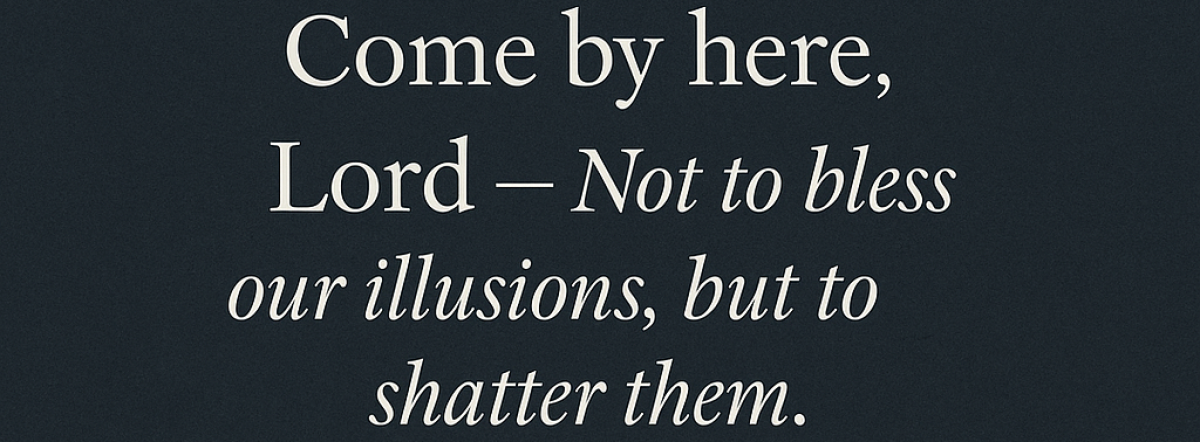
Make us unwilling to bless systems You came to overturn.
Make us ready to proclaim freedom, even if it costs us everything.
Let our preaching shake foundations.
Let our pulpits roar with justice.
Let our churches rise in righteousness.
We ask all this in the mighty, liberating, justice-bringing name of Jesus Christ.
Amen.

 Dr. Charles W. Ferguson