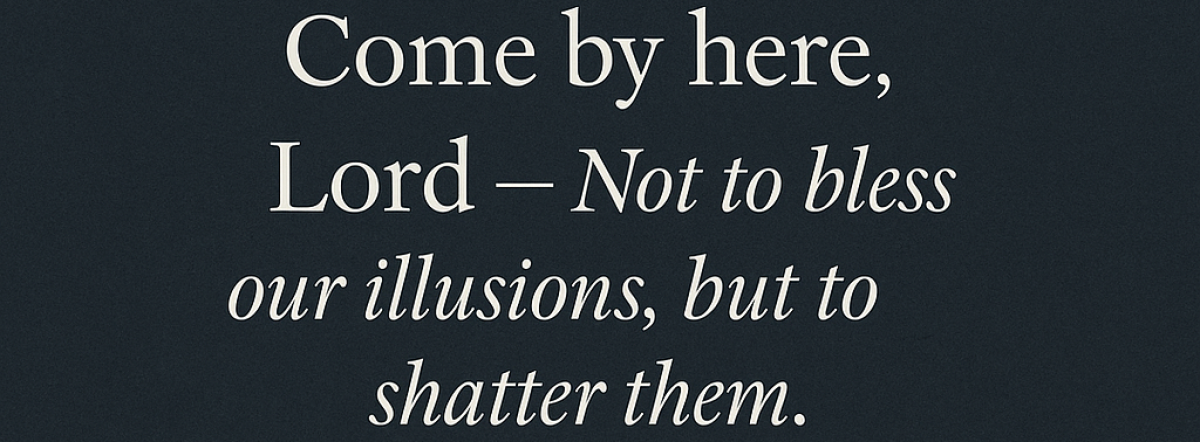

Recently, I wrote something very simple on social media. I’ve been promoting a lot on social media, but have been quiet lately (if that makes sense). A lot has been happening, and I’ve focused my energy on real-world issues. I’m grateful to those who have been praying and present for me over the past couple of months. It has really lifted me up. Don’t worry, I have plenty to say about many things, and you’ll hear it soon. Until then, remember to connect with those you love and tell them how much you love them.
Part of my statement to the social media world was necessary to remind people that life is always going on. Situations and circumstances challenge us to take a moment and reflect on the totality of our experiences in the world. Nothing gets a person’s attention more than having to address the suffering and difficulties with family.
My wife has been faced with a medical challenge. After that unsettling news, my writing partner and four legged best friend, Buddy died peacefully after 11 years and 3 months of loving me and my family. The very next day, my grandfather had an unusual and dangerous reaction to his medication for Parkinson’s. I was with him for 13 hours on Good Friday making certain that his condition was not worse.
After two months of pain, adjustments, sadness, and emotional upheaval, I am able to express this idea–I have something to say. I thank God that Myrissa is improving. I am grateful that my grandfather is home and nearly back to his strolling self.
Trials in life can make you become very silent and introspective. Your energy is redirected toward facing what is before you. It is not free to explore any creative outlets. You may be functioning, but your method of processing life shuts down. When you feel almost isolated, you have nothing to do except face your obstacles and reflect.
I am beginning to believe that God provided this season for me to reflect on my own emotions and pain. (Don’t misunderstand. I address many of my emotions on a regular basis. I have come a long way in that regard. But who really has a desire to deal with the messy stuff in them?) This season provided nothing but reflection time.
I began to reflect on the area of forgiveness. Initially, I did not understand why God would place this need in my heart. Furthermore, I felt that my knowledge and resolve with forgiveness was already settled. How wrong I was. Forgiveness is an idea, concept, act of piety that gets used and abused daily by human beings.
We constantly tell people that it is holy and sacred to forgive those who have done wrong to us. We give this information without any context or engagement with various circumstances. Many people use forgiveness as way to guilt the religious and pious into demonstrating that act to the world. We measure one’s commitment to their beliefs based on the speed of response to one’s apology. I am beginning to believe that we have not a complete job in dealing with forgiveness.
My reflection also brought to my mind that humanity has an issue with boundaries. Relationships dictate how boundaries can be drawn. Many times, we can be guilty of doing harm to those areas. Sometimes, people just don’t care about the need for proper application of boundaries. People will abuse their opportunity to function within the inner space of individuals.
When harm takes place with people, those who have been harmed are charged by certain cultural influences with forgiving the offender and forgetting the offense. The environment never agrees that the offender must demonstrate true contrition and willingness to accept change in the dynamics with the offended. I believe this norm continues to persist for a couple of reasons.
- Terrible exegesis of Biblical ideas. We look at certain scriptures and just take them at the surface and never ask important questions. (Yes, God is cool with you asking questions. If your god can’t handle your questions, then your god is weak. See what I did there?)
- The desire to maintain the current environment. Anything that is beneficial to us, we will defend. If cheap apologies and cheaper forgiveness is welcomed by the environment, the environment will resist any type of improvement that will benefit everyone.
As a person and pastoral leader, I find it amazing that humanity refuses to grow and go further in creating a better world. I realize more than ever people need to be free from the bondage of incomplete thought. We need the opportunity to see the possibility of greater clarity so that we all grow and become people that will exemplify God’s work in the world.
Allow me to share a scripture that is used many times to express the way toward forgiveness–Matthew 18:21-35
21 Then Peter came up and said to him, “Lord, how often will my brother sin against me, and I forgive him? As many as seven times?” 22 Jesus said to him, “I do not say to you seven times, but seventy-seven times. 23 “Therefore the kingdom of heaven may be compared to a king who wished to settle accounts with his servants.[a] 24 When he began to settle, one was brought to him who owed him ten thousand talents.[b] 25 And since he could not pay, his master ordered him to be sold, with his wife and children and all that he had, and payment to be made. 26 So the servant[c] fell on his knees, imploring him, ‘Have patience with me, and I will pay you everything.’ 27 And out of pity for him, the master of that servant released him and forgave him the debt. 28 But when that same servant went out, he found one of his fellow servants who owed him a hundred denarii,[d] and seizing him, he began to choke him, saying, ‘Pay what you owe.’ 29 So his fellow servant fell down and pleaded with him, ‘Have patience with me, and I will pay you.’ 30 He refused and went and put him in prison until he should pay the debt. 31 When his fellow servants saw what had taken place, they were greatly distressed, and they went and reported to their master all that had taken place. 32 Then his master summoned him and said to him, ‘You wicked servant! I forgave you all that debt because you pleaded with me. 33 And should not you have had mercy on your fellow servant, as I had mercy on you?’ 34 And in anger his master delivered him to the jailers,[e] until he should pay all his debt. 35 So also my heavenly Father will do to every one of you, if you do not forgive your brother from your heart.”–Matthew 18:21-35, English Standard Version
The twenty first and twenty second verses are usually the lynchpin argument most people use about forgiveness. The man asks Jesus about how many times does he forgive a habitual line stepper (my favorite phase to use). The man offers a number. Jesus raises the number. Most people stop at that moment believing that the blanket has been made. You need to read a little more. Jesus never leave anyone without application.
Jesus begins to use a parable to explain the fickle nature of human beings. A king was about to get rid of his servant and his family because a debt was not paid. The servant stop and begged the master not to sell his family or him off. The king had a heart. Told the servant that he didn’t need to worry anymore about the debt. Great.
Same begging brother sees a guy that owed him money. Dude asks, where my money, fam? Guy says, I ain’t got it I’m going through it. Give me a minute and I promise I got you. Dude didn’t demonstrate the same grace and got the brother locked up. King finds out and is confused. How you going to beg me and be forgiven, but not offer the same to this man? You got to go too, fam!
The statement and parable gives us a deeper picture than we could ever imagine. First, we must examine the end of text. So also my heavenly Father will do to every one of you, if you do not forgive your brother from your heart. Imagine being a recipient of grace and forgiveness. Suddenly, you are given a chance to offer the same gift. Yet, you choose not to give it. You treat a person according to your preference and not the gift you received. The message is on brand with Jesus.
Freely I give; freely you give. Forgive us our debts, as we forgive our debtors. Whatever you sow, you will reap. The story is not outside the realm of Jesus’ message. We also must remember that the parable was one that dealt with reciprocity. The man received forgiveness and grace from the king. The man was in the same position as the king with a different person and did not pass on what was given to him. Reciprocity was not honored. The good seed that was given was not sowed again into the life of another.
Now go back to the beginning of the text. It is possible that Jesus was addressing a man that was dealing with not only the challenge of forgiveness, but offer that which has been given to him. If that is true, then the context of the parable makes more sense. So what happens when one party is harmed and the other party doesn’t recognize they have done harm? We must now deal with boundaries.
Over the years, I have dealt with many people who have treated me in horrible ways. More specifically, I have dealt with individuals who were determined to do harm to my vocation in ministry. I had people keep money from me that I earned (like money that I earned and was promised). People attempting to threaten my appointment and rewrite my “job description”. All of these people believe to this day that they did the right thing. They never once apologized. They never thought to see the injury that took place. They took it upon themselves to feel important and do what they wanted.
Some of you are about to say that I am being messy. No. I am telling you that God was dealing with my feelings and issues around these old wounds. These things can become very complicated. Somebody might say, why don’t you approach them and ask for an apology? Because they know exactly what they have done and have been approached about their behavior. Still no remorse. So what do you do with that?
“Nothing that we despise in other men is inherently absent from ourselves. We must learn to regard people less in the light of what they do or don’t do, and more in light of what they suffer.”
― Dietrich Bonhoeffer
I am learning like Bonhoeffer suggests that I must look at people through the lens of their suffering rather than the lens of them not meeting my expectations. For that reason, I am able to pray and consider the sacredness of every life while maintaining important boundaries for my growth, development, and future. I am not obligated to welcome people back into my sacred space out of an environmentally pressured obligation. I recognize that the presence of those who have done harm are not privileged to enter into personal moments with me.
Yes, I am called to love God and love people. Yes, I care that people thrive in a world that is not built for many people to experience hope and a future. Yet, I no longer have to feel the pressure to offer cheap grace to anyone unwilling to offer expensive contrition. Bonhoeffer offer a thought on cheap grace. “Cheap grace is the deadly enemy of our church. We are fighting today for costly grace.” I would build this thought out further. Cheap grace is the enemy of human affairs. We need to appreciate the price of costly grace. Otherwise, we will always fail growing priceless relationships that create invaluable community.
So what do we do at the intersection of forgiveness and boundaries? What do we do to avoid a fatal accident? Remember that a sincere apology goes a long way.

 Dr. Charles W. Ferguson